
California students author new ‘digital wellness’ bill, say school cellphone bans fall short
O.C. student says, “It’s powerful to have students at the center of policy change when it comes to education legislation.”

This story was originally published by EdSource. Sign up for their daily newsletter.
After taking a break from social media, Orange County student Elise Choi helped write a bill that would mandate California schools teach digital wellness — a response to growing concerns about how technology is affecting students’ mental health.
Assembly Bill 2071 would require California schools to include digital wellness in health classes, teaching students how social media and artificial intelligence affect their mental health and behavior. Supporters say the bill focuses not on limiting access, but on teaching students how to use technology responsibly.
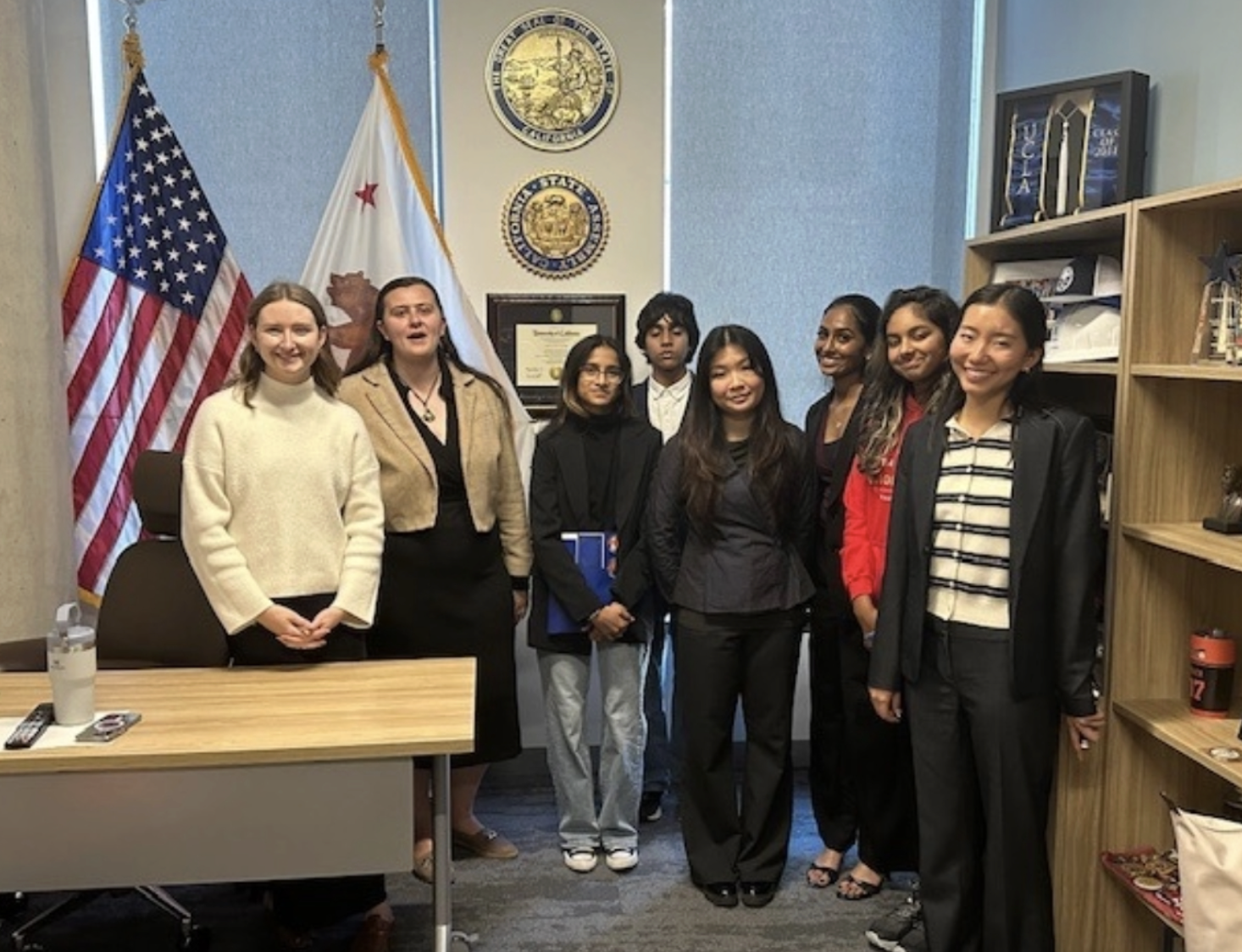
Elise is a junior at the Orange County School of the Arts, a charter school overseen by the Orange County Department of Education. She is also a member of the student coalition, GenUp, and says that a bill that serves students — not simply alleviates parent anxieties — has been long overdue.
“It’s powerful to have students at the center of policy change when it comes to education legislation,” Elise said. “It’s important because we are the ultimate stakeholders, and these issues affect us and our future.”
The bill follows landmark court verdicts that found social media companies Meta and Google liable for designing “addictive” features and endangering children online. Elise said it also responds to what experts describe as a growing youth mental health crisis, fueled in part by concerns about social media use.
If the bill is passed, the California Department of Education must develop by January 2028 a plan to teach students about topics such as healthy screen habits, algorithms and A.I. and safe interactions on social media. The proposal passed a committee hearing last week and is expected to pass in the Legislature with bipartisan support.
State Assemblymember Josh Hoover, R-Folsom, who introduced the bill in the Legislature, said the idea of digital wellness instruction was born out of student pushback against the Phone-Free Schools Act, which would require all public school districts to create policies to ban or prohibit mobile phone use starting in July.
“Now, students are realizing how much the screen time and the social media use really does impact their well-being,” Hoover said. “And they’re actually getting excited about making changes and helping their peers actually improve their health as well.”
Where cellphone bans fall short
For many digital wellness advocates like Kelly Mendoza, a senior education leader at Media Education Lab who served as an expert consultant on the bill, digital wellness education picks up where California schools’ cellphone bans fall short.
“Phone-free schools can reduce screen time or potentially reduce behavioral issues that can happen at school, but that doesn’t teach students healthy media use, decision-making and self-regulation,” Mendoza said. “Students are still not offered the opportunity to learn these skills in school in a structured and valuable way.”
Mendoza said she regularly sees students who are cyberbullied, experience depression and suicidal thoughts, are unhealthily attached to social media or struggle with loneliness in her work at a phone-free high school. A digital wellness course, she said, would teach students that they have control over their relationship to their phones.
Students would learn practical skills such as adjusting account settings, disabling notifications and managing algorithms to limit harmful or addictive content. They would also work through scenarios such as cyberbullying, body image pressure and misinformation to develop healthier behaviors online.
Elise said she would like the curriculum to include families, particularly those from low-income and under-resourced communities. She recently attended a digital wellness workshop at a private school in San Diego, where parents and students learned to create a screen time agreement.
“Digital wellness instruction is very inconsistent, and it depends a lot on the resources of the school,” Elise said. “I also envision digital wellness to be an equitable subject that hopefully all students can have access to.”
Social media can be ‘good’ but ‘inescapable’
Elise said social media also served as an essential “tool” for building connections after she switched to a different high school. She met students online who had launched social impact clubs and helped her sister recruit volunteers to teach dance classes for people with disabilities.
“We’re not anti-tech,” Elise said. “We’re for education, and we have to be balanced with technology, because it can be good and also inescapable.”
Elise said she met with representatives from Google last week, who she said generally supported “the course of safety (for) children and youth online” and expressed support for the bill.
Hoover, however, emphasized that the bill is not meant to shield social media companies from regulation.
“We cannot count on these companies to police themselves when it comes to child safety, so it’s important that we’re educating students, but also putting the right rules and regulations in place,” he said.
Hoover has introduced additional bills to regulate children’s use of social media, including one that would prohibit children under 16 from creating social media accounts — similar to Australia’s blanket ban — and another that would establish an e-safety commission to enforce age compliance.
“Tech companies have a responsibility to be regulated to make sure that they’re not entrapping kids into a very addictive technology,” Hoover said.
Mendoza, a parent of a teenager, said her daughter uses social media to share and receive feedback on her art, where she has connected with a community of artists. She said the course could also teach students how to reap the “rewards and opportunities” of social media.
The course would examine “What are the healthy communities that you connect to that are really fostering your growth and your development as a person? And how can you change your algorithm to connect more with those things?” Mendoza said.
Before she got her first phone, Elise said she spent her time solving Rubik’s cubes, baking and reading. She said she is now spending time on those hobbies when she gets home from school.
“The cellphone ban only gets us halfway — it doesn’t change our relationship with our devices,” Elise said. “We need to teach kids and give us skills for what happens when we get our phones back at the end of the day.”